Parking brake cable replacement

1997 FORD F-150
250,000 MILES • 4.6L • V8 • 4WD • MANUAL
Avatar
SWILSON3828
  • MEMBER
  • 112 POSTS
Hello,

I have the truck listed above XL, Extended Cab. The front emergency brake cable broke a couple of weeks ago at the parking brake assembly. I removed the broken portion of the cable from the assembly, and removed the remaining part that run through the floorboard and to the equalizer. Talked to Ford parts got the part number based on the VIN and production date. It calls for a 95.6 inch cable. I have fished the cable around and secured the cable to the assembly and have ran it through the floorboard and connected the other end to the metal bracket on the frame. The cable seems to be about an inch or so short so I'm unable to connect it to the equalizer. I've changed the rear brake shoes and have made sure the star adjuster has been turned all of the way counterclockwise so as to provide enough slack in the cables that run from the rear brakes to the equalizer. I have made sure all of the slack has been pulled out of the cable running from the brake assembly.. still about an inch or so too short. The sheathing on the front cable is bowed, but since the sheathing stops at the cable bracket under the truck I can't pull any slack out of it. If I remove the entire cable from the bracket and attach the cable without it running through the bracket there is more that enough slack in the cable to connect to the equalizer, but it has to run through the bracket and it comes up about an inch short. Any advice? Sorry for the length and thanks for the help.
Aug 20, 2021 at 7:27 PM

Advertisement
Avatar
JACOBANDNICKOLAS
  • CERTIFIED EXPERT
  • 110,175 POSTS
Hi,

I'm trying to picture what you are experiencing. If it reaches with it disconnected from the bracket, I'm not sure why it's short when it's attached. Is it possible for you to take a couple of pics of what is happening so I can see exactly what you are dealing with?

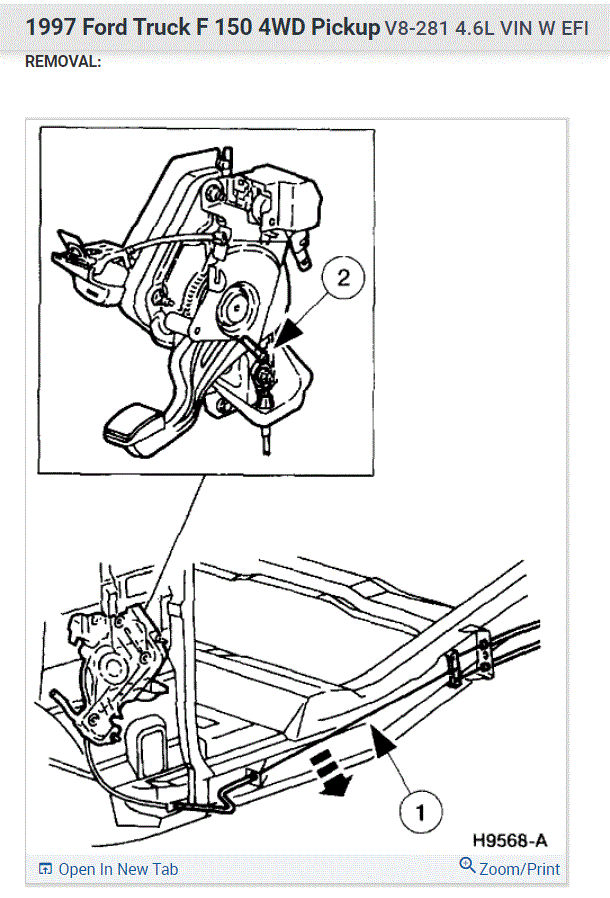
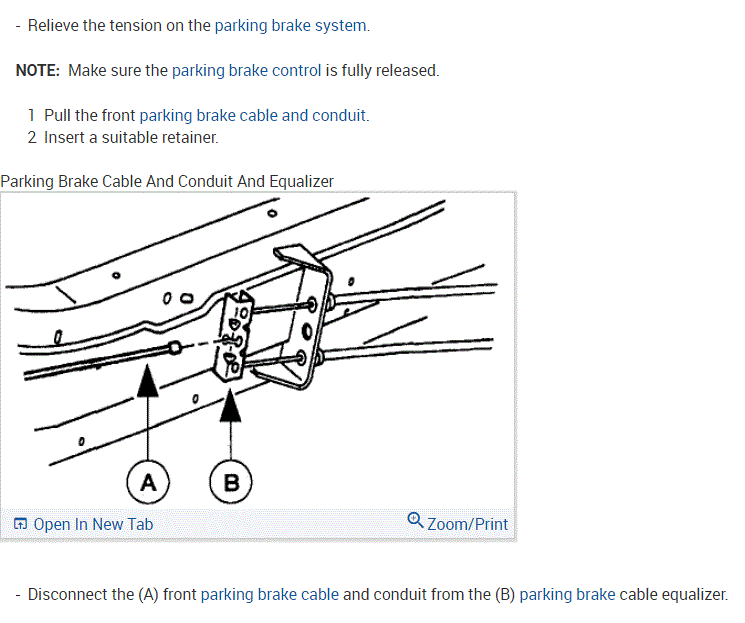
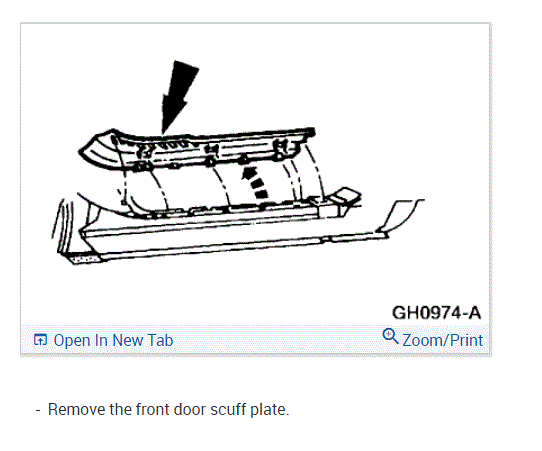
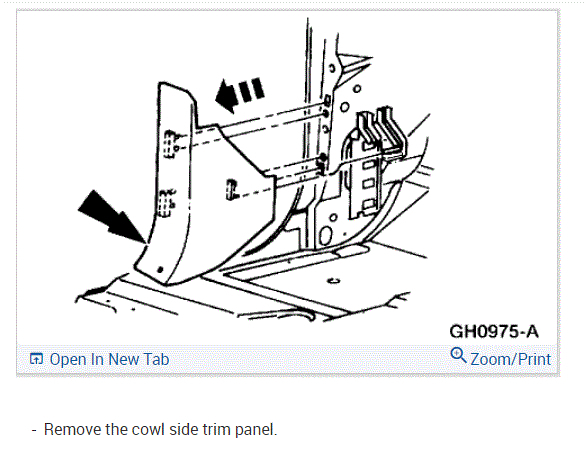
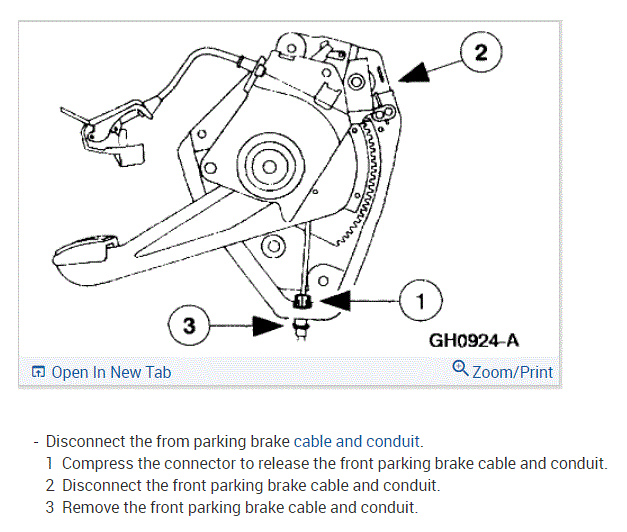
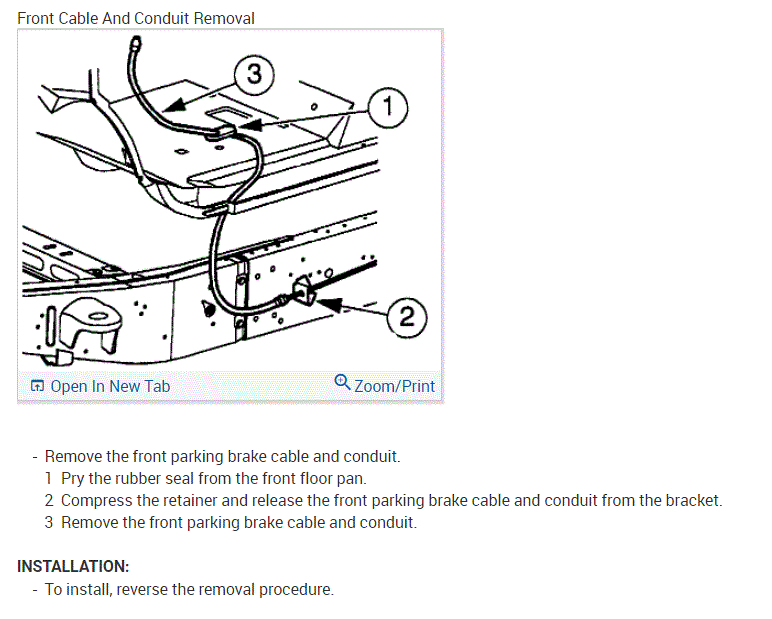
As far as replacement, you mentioned you adjusted the brake shoes, so I assume it has rear drum brakes. So, I attached the directions from the manual for replacing this cable. Interestingly, the directions show step-by-step removal and end with replacement is the reverse of removal.

Take a look through them to see if there is anything you could be missing.

I have one last question. They told you the length made a difference. That is true for the rear cables because of the different wheel bases., but the front is the same. Here is the original part number. F75Z2853AA

If you go to eBay and type Ford and then the part number, they are available.

Let me know if you have questions or if I can help in some way.

Take care,

Joe

See pics below.
Aug 20, 2021 at 10:28 PM
Avatar
SWILSON3828
  • MEMBER
  • 112 POSTS
Thanks for the reply. Yes, you are right about the length of the cable for the front. although, I believe, a couple of places list the length as being something like 95.13. but since that would be shorter it's irrelevant.
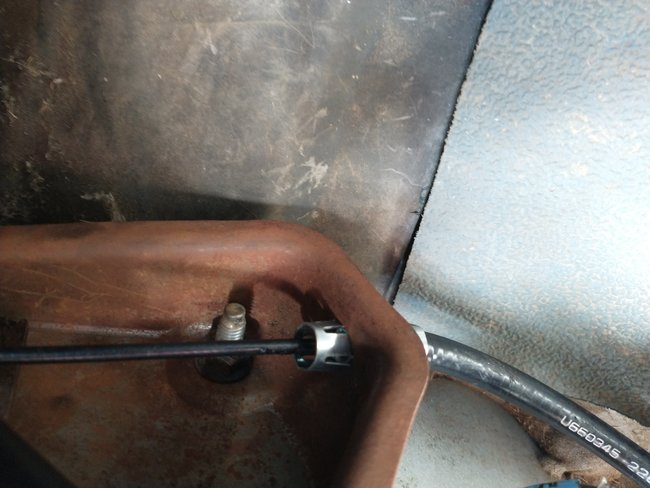
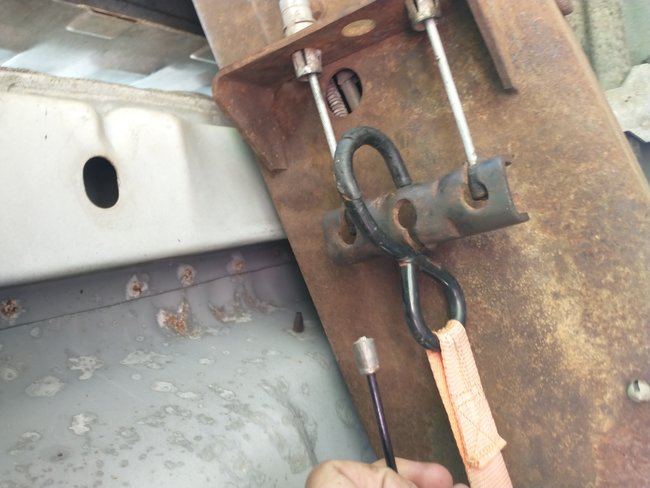
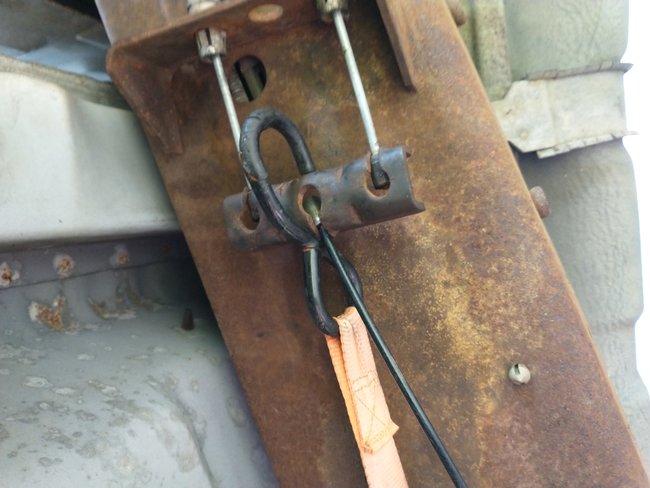
Anyway regarding the cable there is the cable that connects to the assembly and to the equalizer, and then there is the black rubber shroud that protects the middle part of the cable. That shroud has a push through fastener clip on each size, one to secure it at the hole on the assembly right there as it comes through the floor board and before it goes up and around the interior of the assembly. The other connects to the bracket welded onto the frame on the underside of the truck. Once that shroud is connected to the points you cannot move or slide it because the fastener clips keep it in place. Of course you're still able to move the cable back and forth through the shroud.

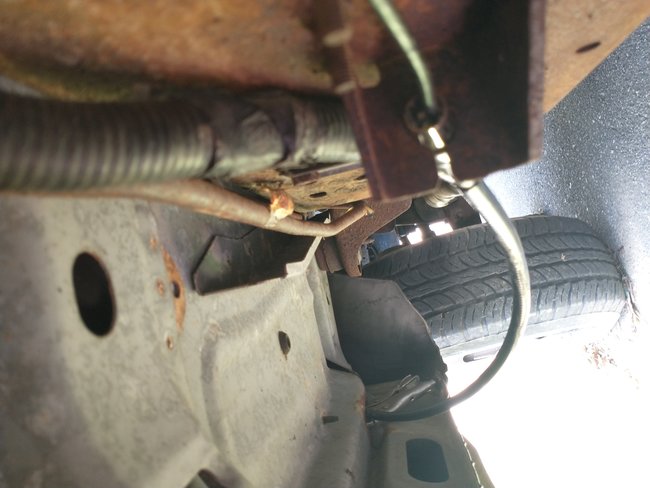
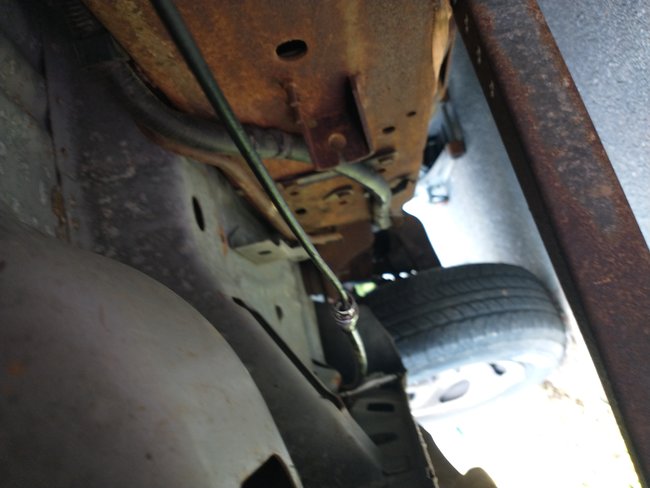
Once connected the shroud itself has a fairly decent bow in it but you can't pull the bow out if it because it's secured in place by the fasteners on either end. That bow takes up two or three inches of cable that can't be pulled out because the shield wont move and the cable, itself, is inside of the shroud. That's why when I remove the shroud from the fastener underneath I can pull the slack out of the bow in the shroud and the cable comes along with it, and that is where I get the extra length from the cable to be able to attach to the equalizer.

The best way to visualize what I'm saying is to take a string pull a few inches tight with both hands where there is no slack. (this would represent the shroud and cable disconnected from the underneath bracket and secured to the equalizer) and then move the right hands closer to the other. As you do that the string will lose tension in the middle and start to dip in the middle. That dip is similar to the dip in the shroud when it's secured to the bracket underneath. Since the cable is housed in the shroud the cable will follow the exact path of the shroud. That immovable portion of the shroud contains a couple inches of cable that can't be pulled tight. when I disconnect the shroud from the fastener I can pull the bow (slack) out of the shroud and since the cable is within the shroud that allows me to pull enough slack out of the cable to attach it. It seems to me that the shroud is an inch or two too long. A little bit of slack pulled out of the shroud would allow the actual cable to reach the equalizer.

I've heard of people using a ratchet strap to pull the equalizer the final inch or so, but the first time I did that the cable on the brake shoe side popped off of the holder where it connects to the emergency lever and I had to disassemble the brakes to get it back on.
Aug 21, 2021 at 9:15 AM
Advertisement
Avatar
JACOBANDNICKOLAS
  • CERTIFIED EXPERT
  • 110,175 POSTS
I can picture everything you mentioned except the bow in the shroud. That doesn't sound right. Can you take a pic of it and upload it for me to see?

Let me know.

Joe
Aug 21, 2021 at 7:54 PM
Avatar
SWILSON3828
  • MEMBER
  • 112 POSTS
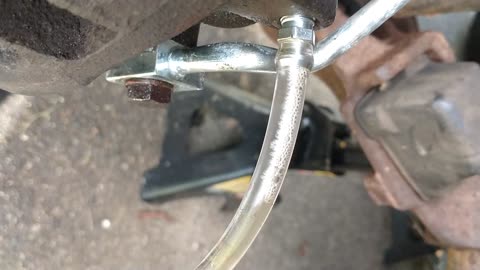
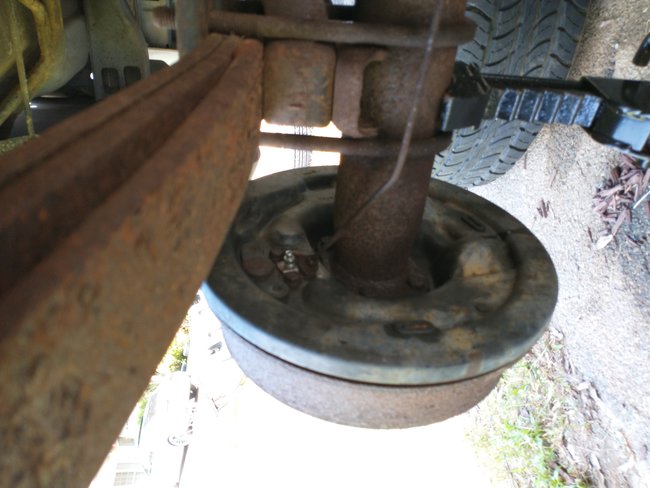
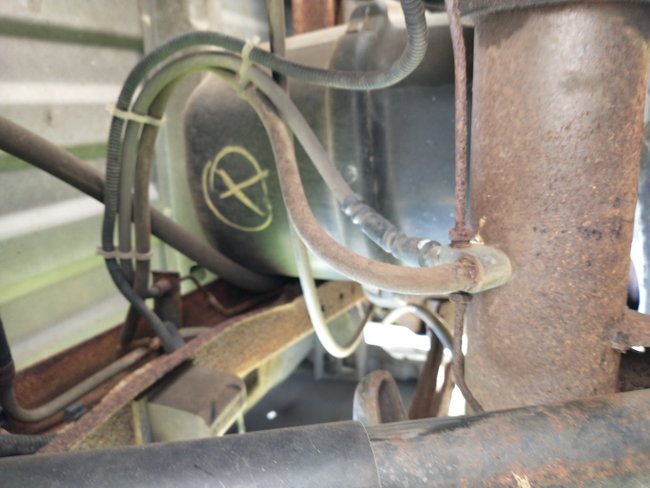
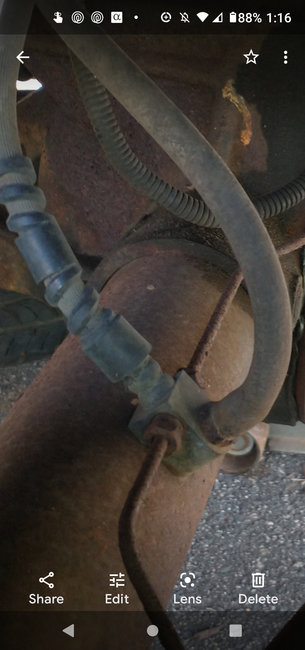
Sure thing. I've included a picture of the cable secured at the fastener on the assembly, a shot of the cable underneath with the bow while fastened to the bracket on the frame, a picture of how short the cable is to the equalizer, a picture of the cable disconnected from the underneath bracket, pulled tight, and secured to the equalizer. The pictures uploaded such that you'll have to flip the first two to the right once and the last three to the left once to get the proper angle. Sadly I wish now this was my only issue, lol. After replacing the rear brake shoes and bleeding the lines the brake pedal goes all the way to the floor and my ABS light is flashing. I'm guessing the brake booster has gone bad as the brakes should still operate without the ABS system working properly (at least I think lol).
The one thing I didn't do but will do tomorrow is adjust the star controllers on the the rear brakes. When replacing the brakes I screwed both of them all the way and when I replaced them I never adjusted them back out. I hope this is the reason for the spongy brake issue. Anyway, thanks for all of the help. You have a great site here and have helped me quite a bit in the past with other issues, things I likely wouldn't have figured out had it not been for your help, so thank you!
Aug 21, 2021 at 8:36 PM
Avatar
JACOBANDNICKOLAS
  • CERTIFIED EXPERT
  • 110,175 POSTS
Hi,

Everything I see looks correct. The only thing I can think of is someone sold you the wrong part. What is the brand and part number of the cable they sold you? Does it cross to the part number I provided above?

As far as the brakes being spongy, that is because the rear brakes are totally out of adjustment. However, the pedal to the floor is another issue.

https://www.2carpros.com/articles/brake-pedal-goes-to-the-floor

Let me know the part number or if you already cross-referenced the number.

Let me know.

Joe
Aug 21, 2021 at 10:43 PM
Avatar
SWILSON3828
  • MEMBER
  • 112 POSTS
Good morning,

I did cross reference the number you provided with Raybestos and it gave me a Raybestos # BC95389. The cable length on this Raybestos item is only about 65 inches. The part I ordered initially that is about an inch short is a Dorman C600345 that is suppose to have a 95.6 inch cable. I should have included that the production date of my vehicle is 03/1996. The only other thing I can think of is that maybe I routed the front end of the cable the wrong way when connecting to the brake assembly. There was only one logical route, which was straight up and over the guide shroud to the left, then back to the connection. Imagine a backwards P as the route of the cable that wraps around the assembly. Other than that possibility I'm not exactly sure what the issue is other than maybe the wrong cable was put in the package when sealing the product bag. It's a pretty straight forward application. Thank again
Aug 22, 2021 at 8:59 AM
Avatar
SWILSON3828
  • MEMBER
  • 112 POSTS
Sorry for the multiple replies. I have reordered another front brake cable hoping it was just a fluke cable that just wasn't long enough. That being said I literally have no brakes now. Had them when the emergency cable broke but after I changed the rear shoes and bled the brakes I'm getting a pedal that goes all the way to the floor when the truck is running. The brake is nice and stiff when the truck is off but sinks as soon as I turn the engine on. When I do press the brakes I hear a hissing/blowing sound when the pedal goes to the floor. To me it has to be the master cylinder or the brake booster. Is there any way that would distinguish one from the other as far as symptoms go? Also, the ABS light has started flashing rapidly around 14 or 15 flashes. This has a rear ABS system in it.
This truck has gone from a broken front emergency cable to replacing the rear brake cylinders to replacing the left front brake hose (started leaking when I moved the caliper to replace the front pads), to no brakes. The pedal to the floor issue was happening before I replaced the left front brake line. Any ideas as to what this sounds like and is there a way to simply drive without the booster attached? I know the brakes will be harder to activate, but is this something that can be done? Apologies for all of the questions. I've got a business that is on hold until this truck gets fixed!! Thanks again!
Aug 22, 2021 at 6:39 PM
Avatar
JACOBANDNICKOLAS
  • CERTIFIED EXPERT
  • 110,175 POSTS
Hi,

Make sure the brake fluid is full. If it is, replace the master cylinder. Take a look through this link. I have a feeling since the brake cable was disconnected and you had a spongy brake pedal, the pistons in the master cylinder traveled further than normal causing damage to the plungers.

As far as the booster, that won't cause this.

Take a look through this link and let me know your thoughts.

https://www.2carpros.com/articles/brake-pedal-goes-to-the-floor

Take care,

Joe
Aug 22, 2021 at 9:44 PM
Avatar
SWILSON3828
  • MEMBER
  • 112 POSTS
Very helpful tutorial! The thing is that I had brakes even after the EB cable broke, and when I ended up. replacing both rear cylinders and shoes I had some brake but not much, and now that I went and replaced the front brake pads and, subsequently, the left front brake line.. I have no brakes at all. I did not see any leaking behind the master cylinder and I didn't see any leaking at the front calipers; r the rear drums. I double bled all four corners starting right rear, left rear, right front, left front. Still the pedal presses all the way to the floor when the car is running. When the car is turned off you can pump the brake and it will stiffen up nicely and hold. Just odd to me the brake goes to the floor while running but stiffens up when the car is off. Seems to me the faulty master cylinder would cause it to go to the floor, both with the engine on or off.
All signs point to the master cylinder like you've mentioned, but I have heard of that also being a symptom of a faulty BB, although with a faulty booster the brake pedal usually is stiff from what i have gathered. Thanks again for the great advice.
Aug 22, 2021 at 11:07 PM
Avatar
SWILSON3828
  • MEMBER
  • 112 POSTS
Also, I should add that I removed the vacuum hose from the BB when the vehicle was running and the brakes stiffened up. The engine started to idle rough but the brakes did stiffen. Thanks
Aug 23, 2021 at 6:01 AM
Avatar
JACOBANDNICKOLAS
  • CERTIFIED EXPERT
  • 110,175 POSTS
Hi,

What you experienced when you disconnected the vacuum from the BB is normal. The loss of vacuum to the booster caused the pedal to get stiff and the vacuum leak created caused the engine to run bad. That is expected.

As far as the brakes going to the floor, the booster shouldn't cause that. I suspect either the master cylinder or there is air in the system. Think about it. For the brake pedal to go to the floor, if the system is bleed, full of brake fluid, and there are no leaks, it wouldn't go to the floor unless something gave (broke).

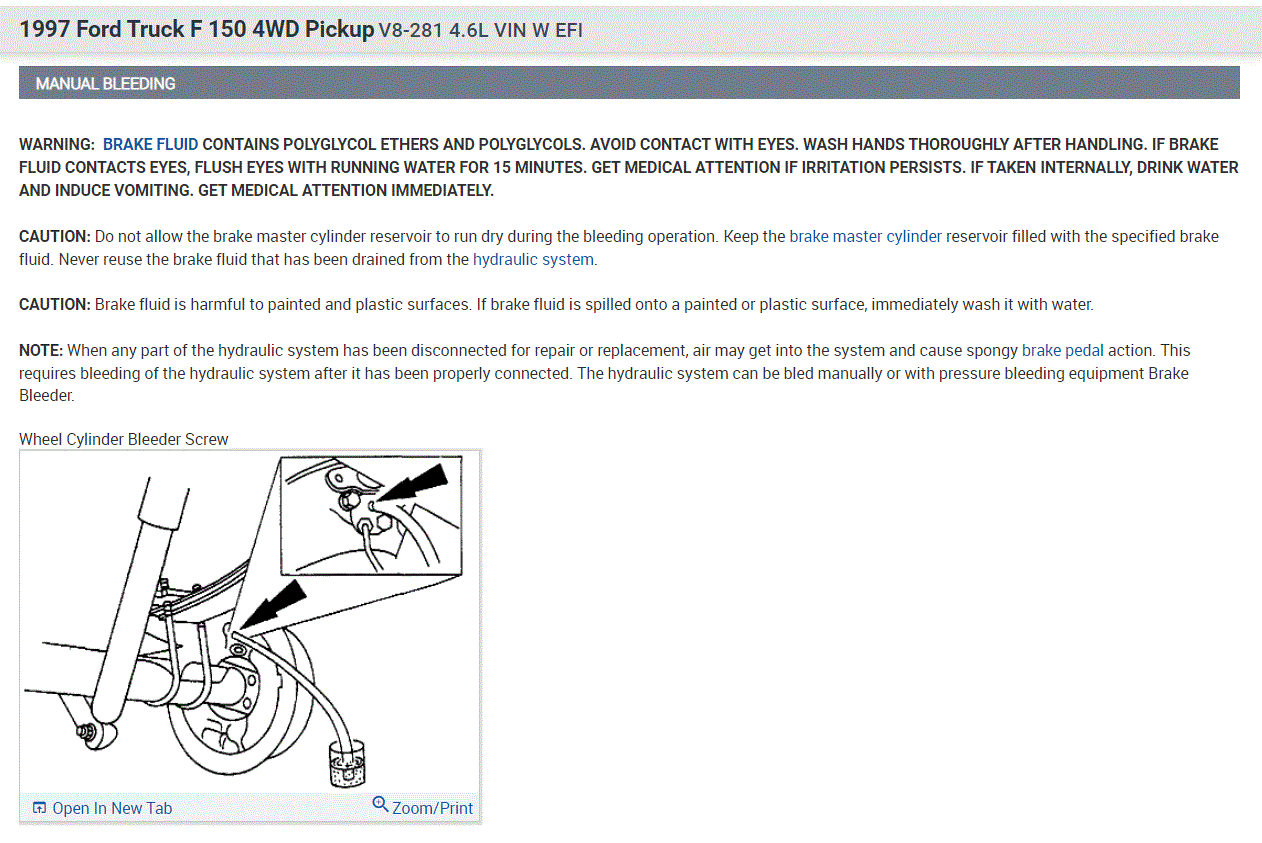
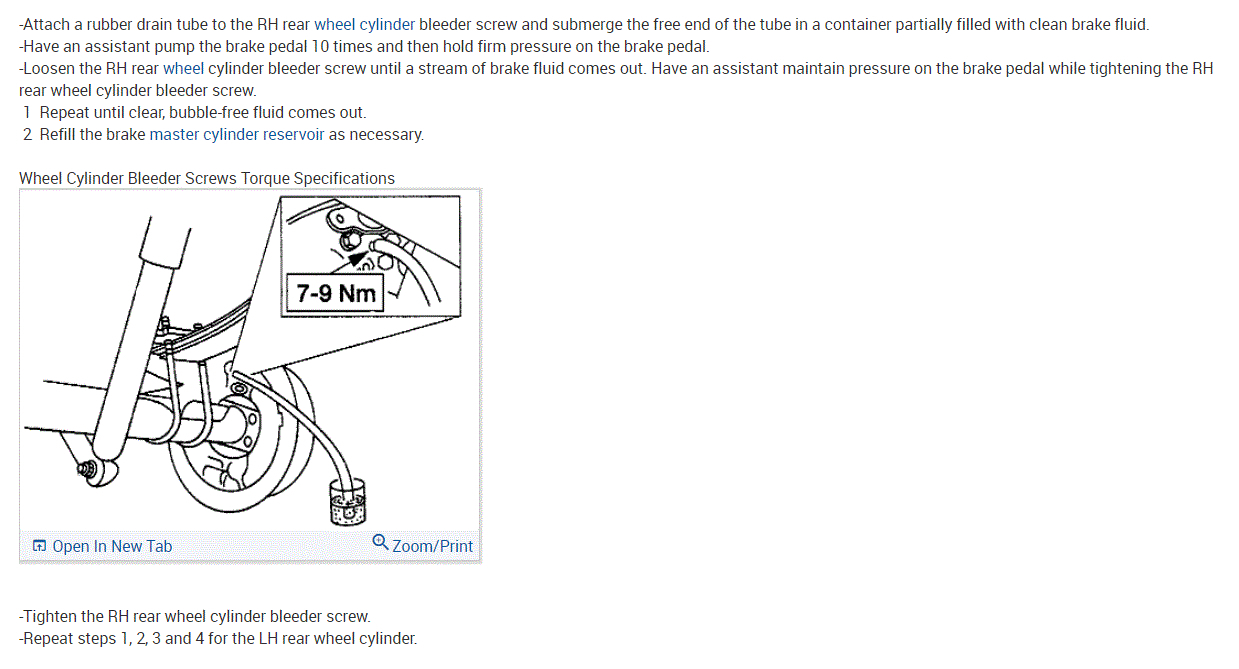
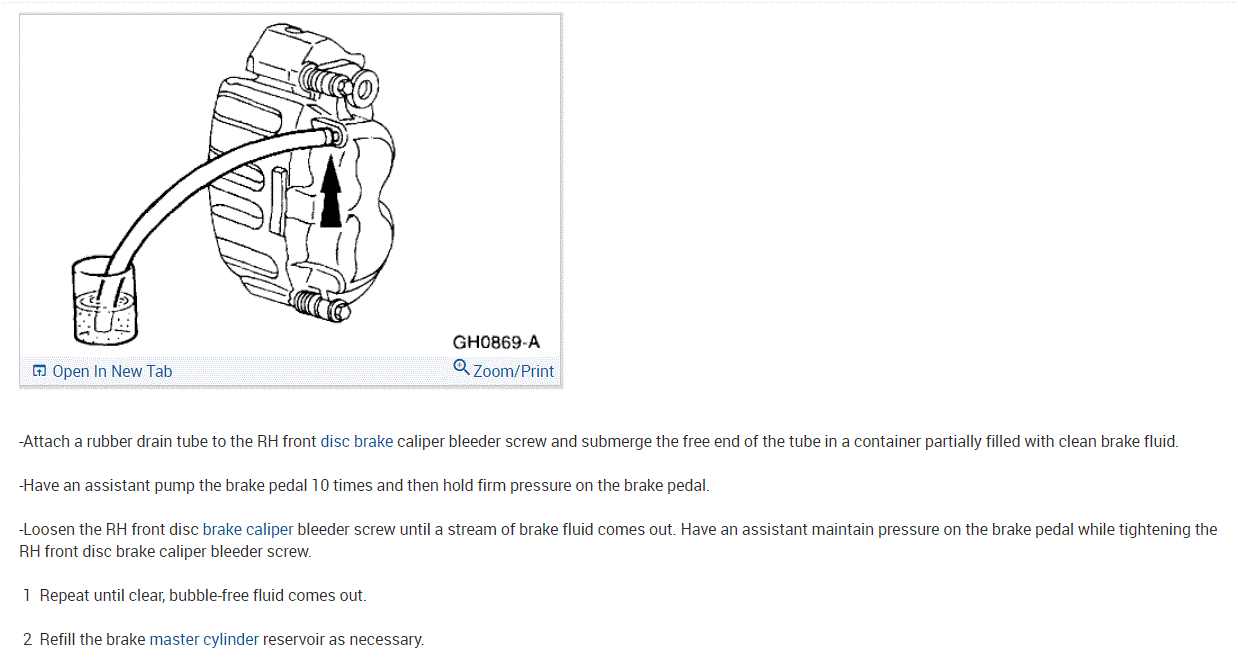
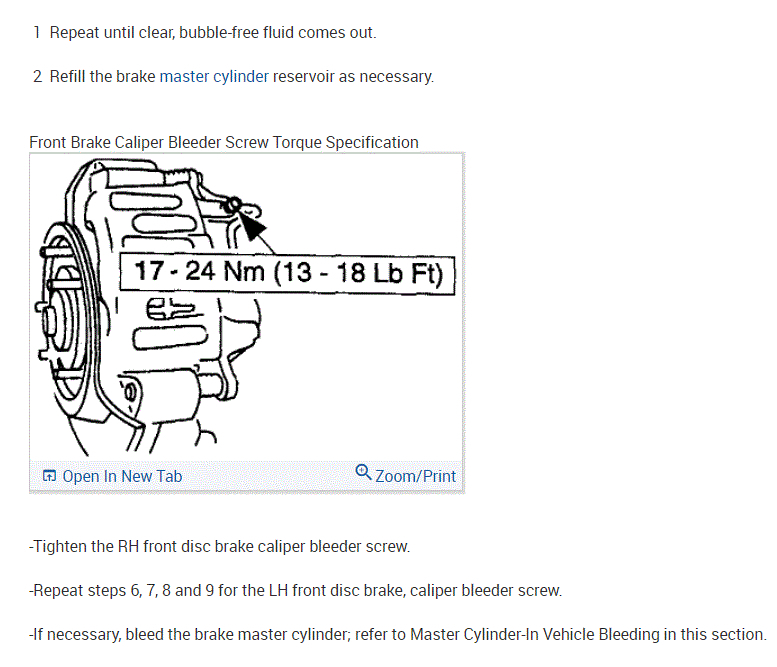
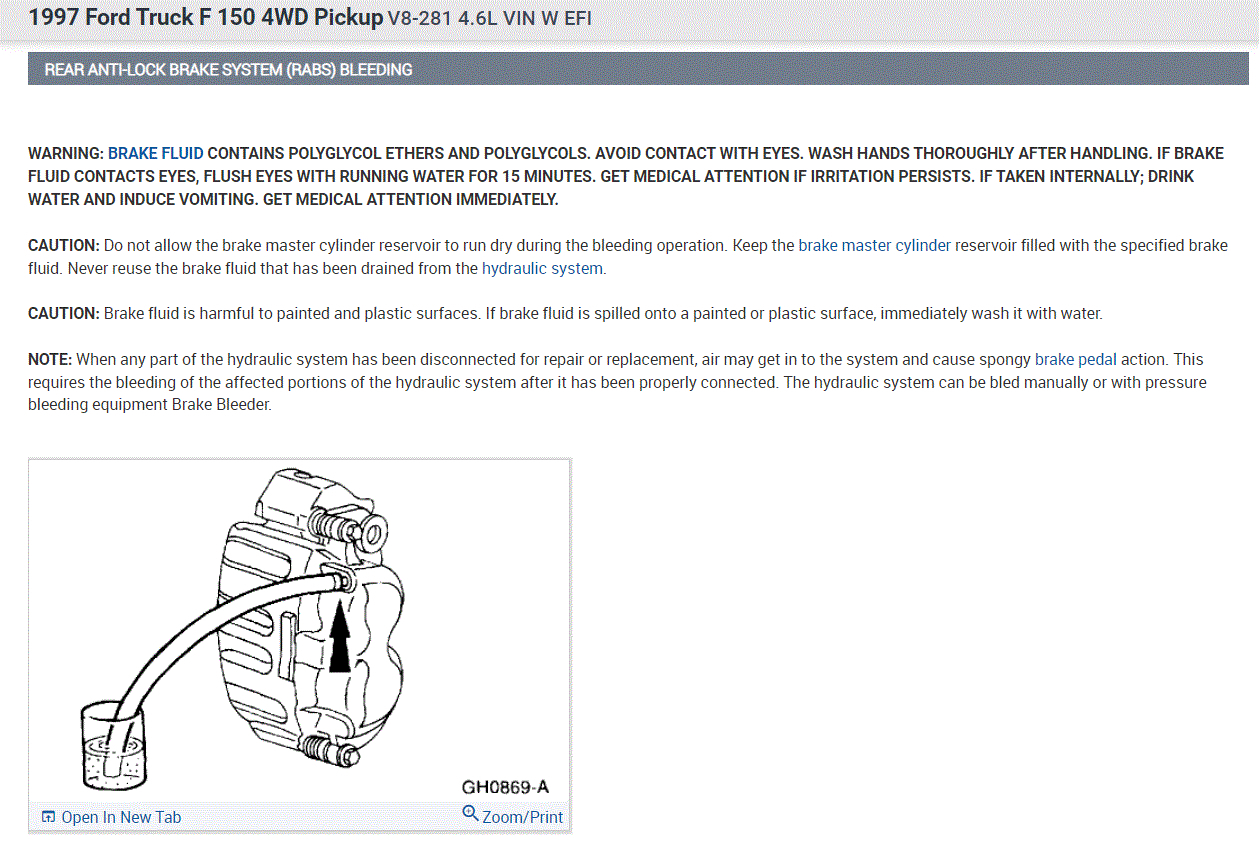
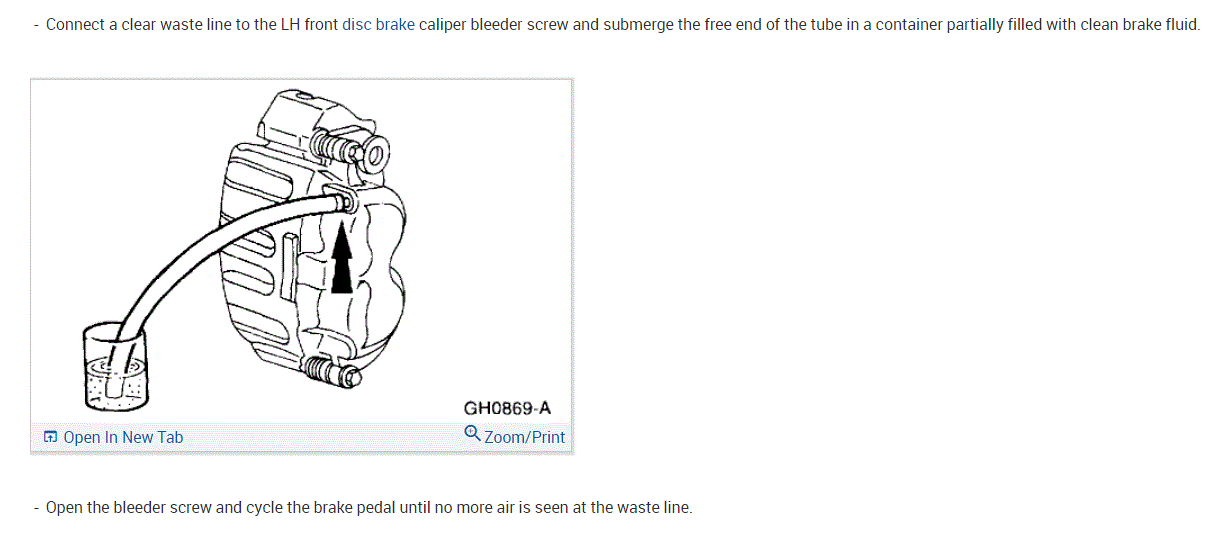
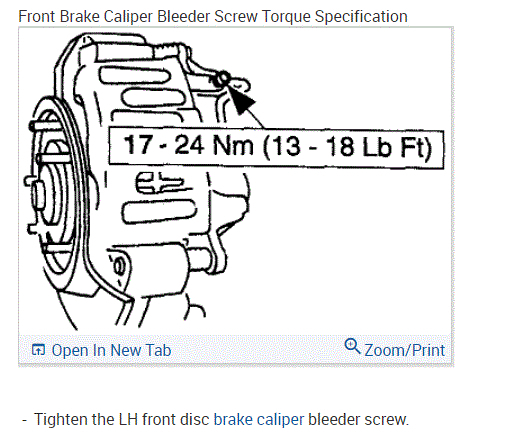
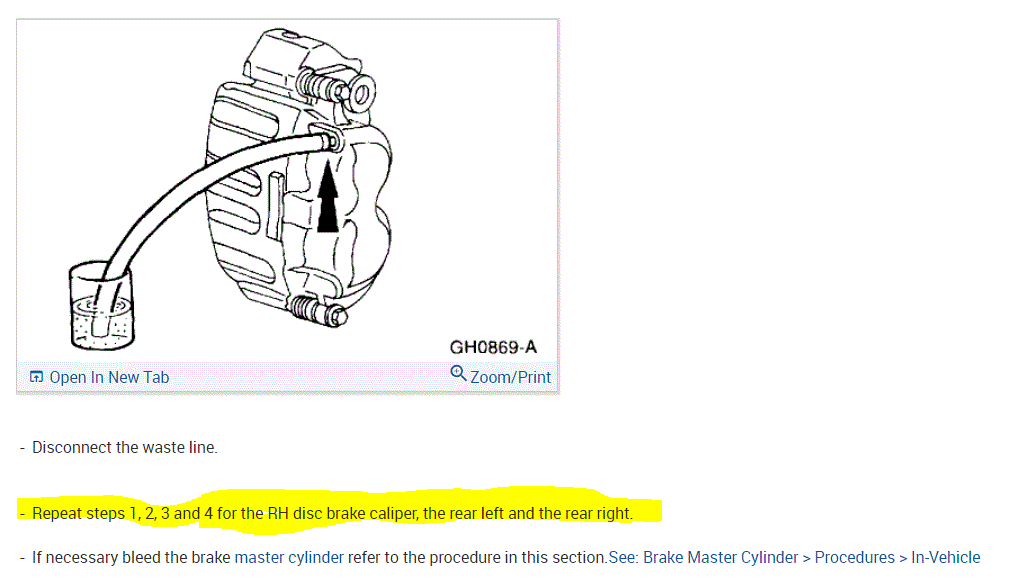
I attached the directions for bleeding the system. Take a look through them and let me know if that is how it was done.

Also, let me know if you have 4 wheel ABS (if I recall, that is only 4 wheel disc systems), if you have only rear ABS, or no ABS.

Take care and let me know what I can do to help.

Joe

See pics below.

Aug 23, 2021 at 6:33 PM
Avatar
SWILSON3828
  • MEMBER
  • 112 POSTS
Oh my goodness lol.....I've replied twice and neither posted so I'm going to reply with the body and then another reply with the video.

To answer your question, yes....that is the exact what Ive always bled brakes on all of my vehicles. That was the way they were bled after I replaced the rear wheel cylinders, and that's how I bled them today after replacing the Master Cylinder. Even after replacing the Master Cylinder the pedal still easily goes to the floor when the engine is running. the pedal is nice and still and doesn't slowly sink to the floorboard when the engine is off. It goes down a couple inches and holds there. As mentioned there is a noticeable whooshing noise when the pedal is pressed to the floor, of which I've included a video of. Can't see it very well but you can def hear it. I have also included a video of my ABS light flashing rapidly and then, after pressing the pedal several times, the light going off. The system is basic. The booster rod pushes the plunger in the Master Cylinder which, in turn, sends pressurized brake fluid to the rear cylinders and front calipers. If the fluid is fully compressed then the cylinders and calipers will expand and stop the vehicle. That just isn't what is happening. Could the ABS system be causing this? I mean technically shouldn't the brakes still work even if the ABS system isn't?? I guess it could be the rear cylinders I replaced, but there are no fluid leaks anywhere and even if there was I would think it would be isolated to that one particular wheel. The pedal goes down like there is no pressure on any wheel. The brake booster is suppose to help braking easier, so logic says if that went out then braking would be harder. Also, if there was a leak in the system wouldn't the pressure slowly bleed down from the firmness there is when the engine is off?? I mean I guess there could still be air in the system but I would find it very hard to believe as I used a 32 ounce bottle of DOT 3 each time I bled those brakes. Shouldn't any air in the system be forced to the bleeder valve when pressure is put on the system when bleeding? I mean the issue has to be air in the system, a malfunctioning Master Cylinder, or some strange rare malfunction with the booster. I'm going to jack the rear of the truck, remove the check valve from the BB, start the truck, put it in gear, and see if the brakes catch without BB assistance. My guess is they will. If the brakes work without the booster then wouldn't they work WITH the booster?? Very annoying issue lol. The videos in the next reply are of the brake being pressed to the floor with the engine running, with the whooshing noise, and a video of the ABS light flashing rapidly before going off after the pedal is pressed to the floor several times. Thanks for any advice.
Aug 24, 2021 at 6:44 PM
Avatar
SWILSON3828
  • MEMBER
  • 112 POSTS
Btw. I know you're suppose to bleed brakes with the engine off, but do you think it would help if I bled these brakes with the engine running?
Aug 24, 2021 at 7:02 PM
Avatar
JACOBANDNICKOLAS
  • CERTIFIED EXPERT
  • 110,175 POSTS
Hi,

If you are getting a good flow of fluid at each wheel, at this point, I feel it has air in the ABS. Does this have 4wheel ABS or only rear?

I do hear the noise you are referring to. If you replaced the master cylinder and have the same issue, it must be air in the ABS, so let me know which system you have.

Also, the only difference of bleeding with the engine running is you will have brake fluid shoot out when bleeding because of the assist.

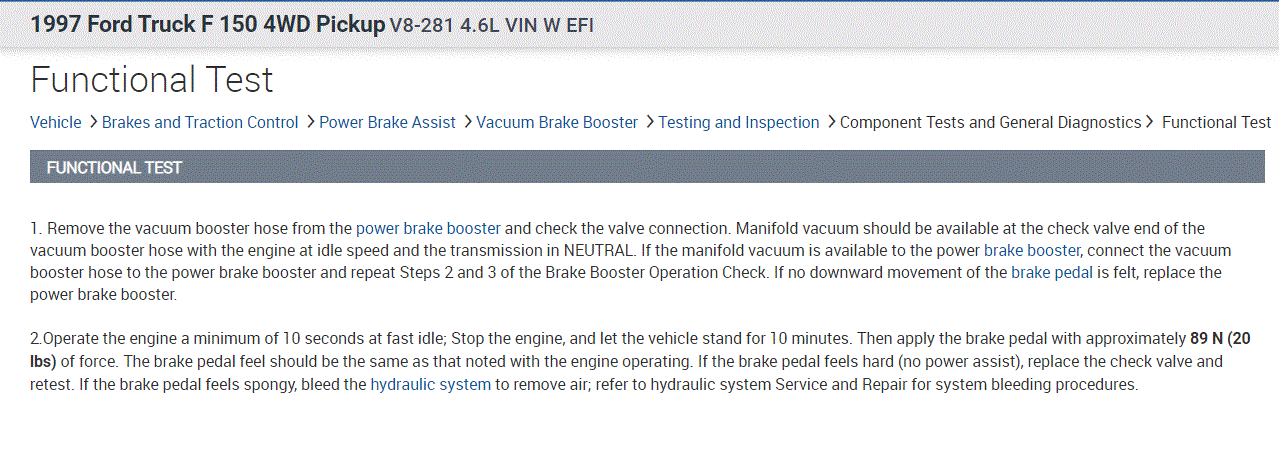
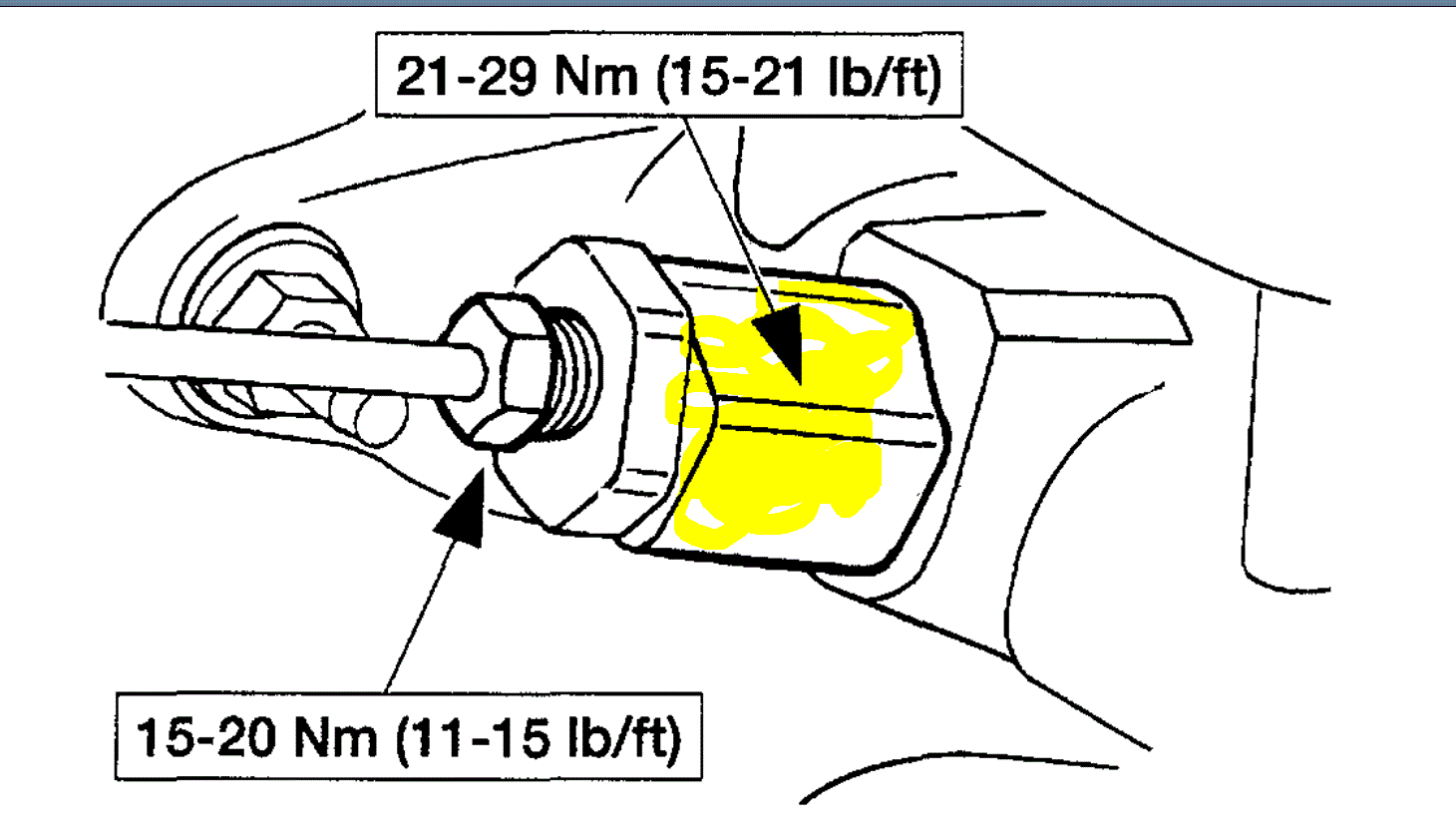
I attached a pic below that explains how to test the brake booster. I don't think that is the issue, but anything is possible. See pic 1.

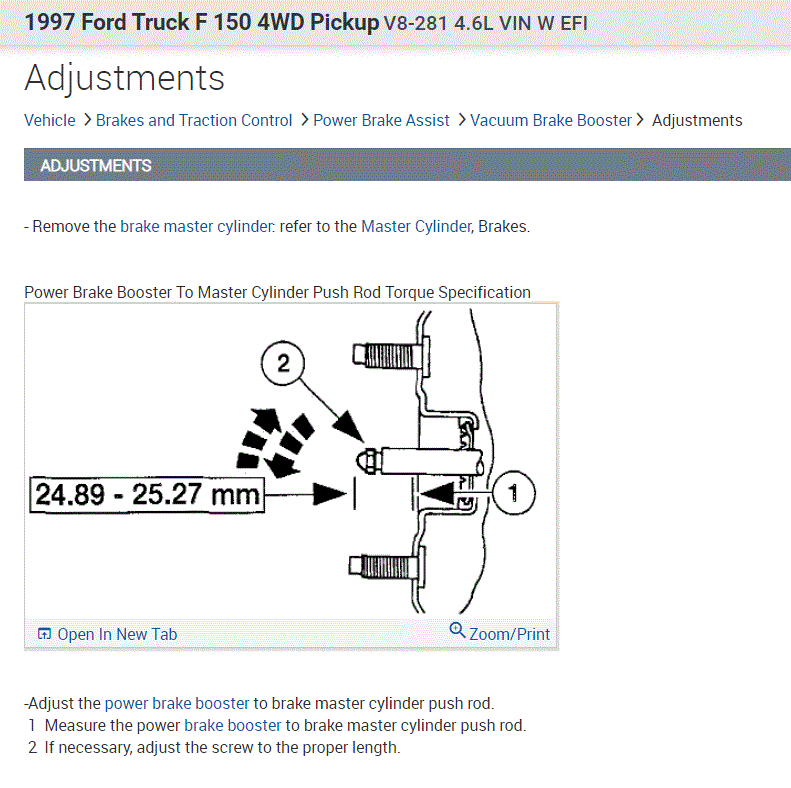
Also, pic 2 explains how to adjust the push-rod between the booster and the master cylinder. That could be off as well.

Let me know about the ABS and if you checked the adjustment.

Take care,

Joe
Aug 24, 2021 at 7:44 PM
Avatar
SWILSON3828
  • MEMBER
  • 112 POSTS
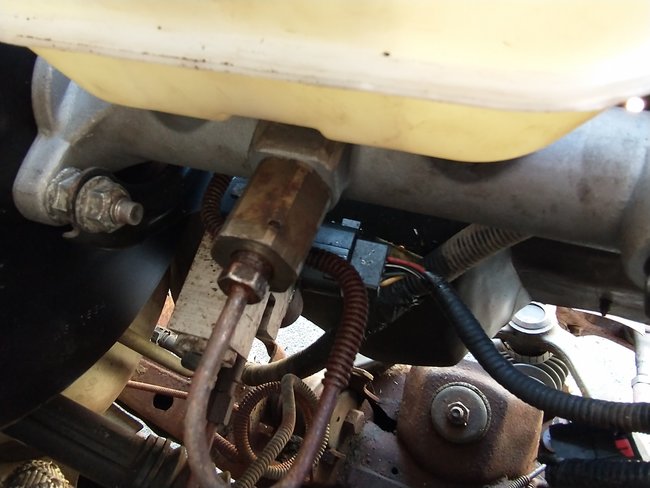
Sorry, thought I had mentioned with was rear wheel ABS. I think 4 wheel ABS was an option on this truck and 4 wheel ABS the standard must have been in one of those replies that didn't post. The adjustment of the booster rod.. I honestly had no idea they were adjustable, but truth be told the ease of pressing the brake pedal to the floor now is the exact same as it was prior to replacing the master cylinder. Not sure how I would have gotten air in the ABS only changing out the rear cylinders but I guess it is possible. I've actually specifically looked for the ABS module but couldn't find it. I thought it was under the air filter housing but it wasn't, and then I thought it might be mounted in the rear and it wasn't lol. I don't know where that module is unless it's directly under the master cylinder. There was a bracket holding some sort of device onto the bolts that the master cylinder is attached to the BB with. Two screws holding the master cylinder onto the BB and then two screws on top of these holding that bracket on.
Aug 24, 2021 at 8:06 PM
Avatar
JACOBANDNICKOLAS
  • CERTIFIED EXPERT
  • 110,175 POSTS
Hi,

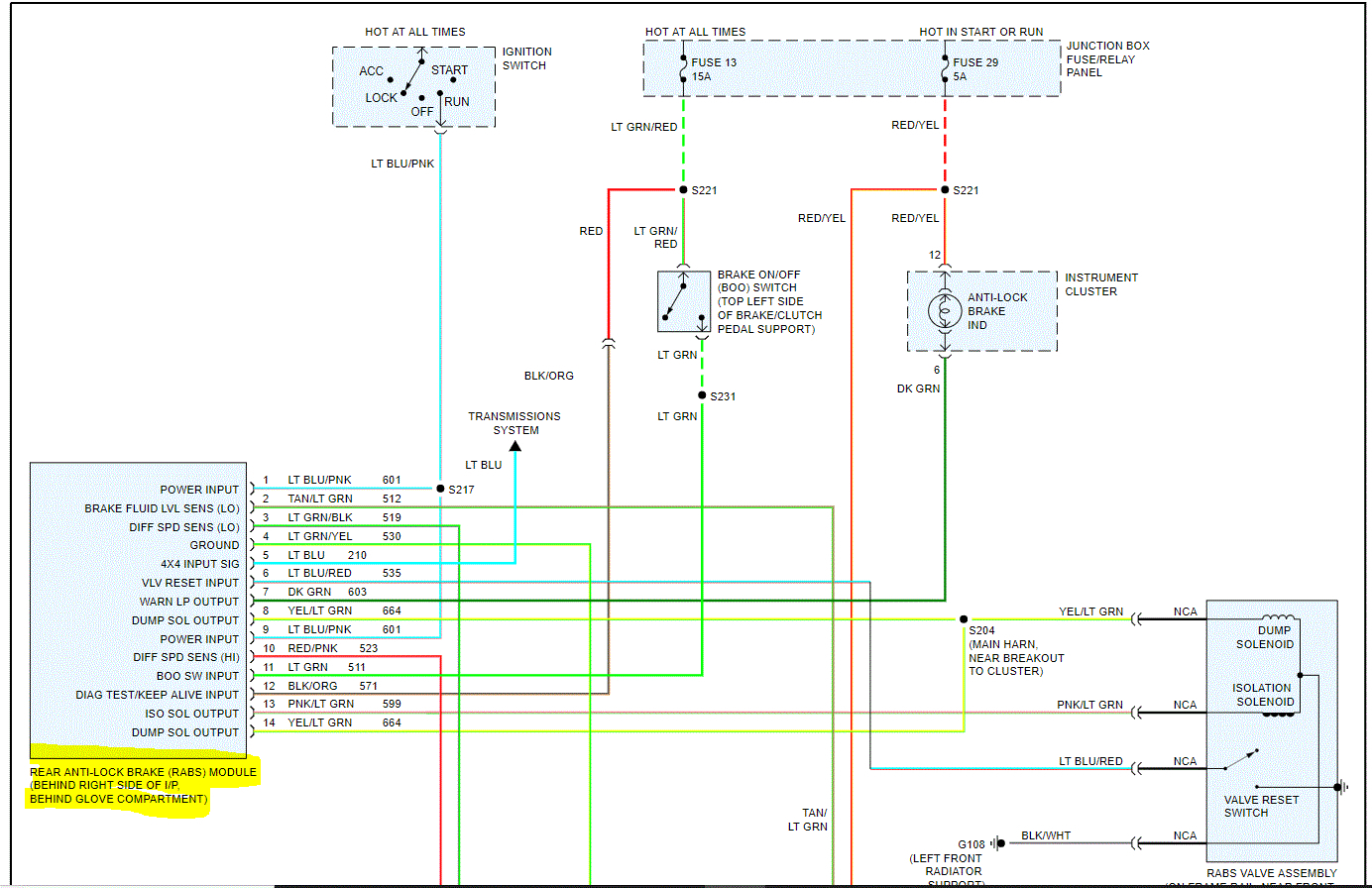
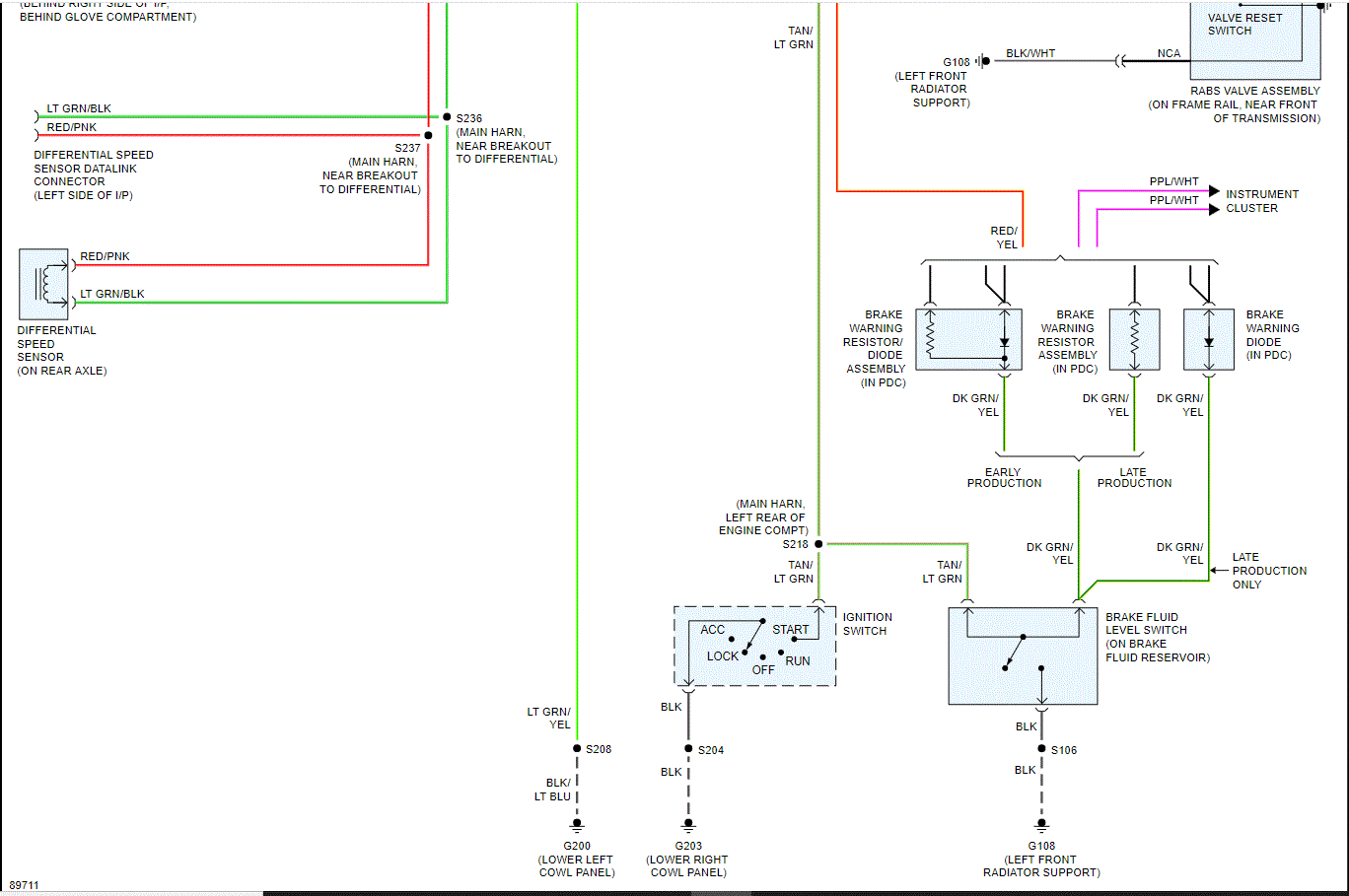
The module for rear-wheel ABS is behind the glove box. If you look at the attached pics, I included the wiring schematic for this system. I had to cut the pic in half to make them readable. I did overlap them so you can follow from one to the next.

The remaining pics are the bleeding procedure for this system. Interestingly, it is in the reverse order (LF, RF, LR, RR). Take a look through them.

Let me know if this helps.

Joe

See pics below.
Aug 24, 2021 at 9:20 PM
Avatar
SWILSON3828
  • MEMBER
  • 112 POSTS
Thank you. This is interesting. I read somewhere that the bleeding procedure was done opposite of normal if the ABS module was mounted in the rear lol. I'm guessing it was a misprint of some sort and that it was meant to say rear ABS system.
So all I have to do is bleed the brakes opposite of how I've been doing it and it will get the air out of the ABS? No scanner to activate the ABS is needed? I'll definitely give it a shot and let you know how things turn out. Hopefully this solves the issue. Thanks again and take care.
Aug 25, 2021 at 6:44 AM
Avatar
SWILSON3828
  • MEMBER
  • 112 POSTS
To add, regarding testing the BB. It mentions a repeating of steps 2 and 3, but I'm not sure what the third step is. Also, it mentions idling the engine high RPM for 10 seconds, turn engine off and let sit for 10 minutes and then press pedal and it should feel the same as it does with the engine running. I'm assuming these testing instructions are based on the ABS working properly, is that correct? Reason being is that I already know the pedal goes to the floor when running, but firms up when off. The BB check valve.. I disconnected it from the booster, and drew a suction on it. It allowed air to be sucked in, but wouldn't let any air exhaust from it, so I'm guessing the CV is good.
Aug 25, 2021 at 7:40 AM
Avatar
SWILSON3828
  • MEMBER
  • 112 POSTS
Okay, so I followed the instructions for bleeding the brakes for ABS of my truck. I have to ask how much brake fluid can go in a vehicle because each front brake bubbled and bubbled and bubbled some more... almost such that I'm thinking air may have been seeping into the tube from where it was attached to the bleeder screw. In any event after bleeding the front calipers I started the truck to see if I would get any resistance. Still goes right to the floor. No difference whatsoever. Being that each front caliper if fed from a separate line, and the rear two wheels are fed from a third line I would have def thought I would have felt some resistance in the pedal. Just to verify; when bleeding the brakes I cycle the brakes continuously until bubbles disappear. I'm taking that means with the engine off and with the cap.in the master cylinder open a bit. I attach the hose to the bleeder screw, put the other end into a jar half filled with brake fluid, open the bleeder screw and pump the brakes slowly and continuously until there are no more bubbles, and then repeat for each wheel? Thanks
Aug 25, 2021 at 6:11 PM
Avatar
JACOBANDNICKOLAS
  • CERTIFIED EXPERT
  • 110,175 POSTS
What you described is correct. When you replaced the brake hose, did you remove the caliper or replace it? Is the bleeder on the top of the caliper or toward the bottom?

Also, did the excessive amount of air come out even though it was already bleed or did you open the system again?

As far as the bleeding, close the master cylinder when doing it. Also, do it with the engine off.

Let me know about the caliper. If the adjustment of the booster push rod isn't an issue and there are no leaks, there has to be air or another bad master cylinder. The system is sealed and hydraulic. If there is no air in it, the fluid has to push the calipers and wheel cylinders to work. If that isn't happening, we may need to open the primary brake line (for front brakes) at the master cylinder and see if there is enough pressure to push your finger off the opening.

When you installed the new master cylinder, you did bench bleed it first, correct?

Let me know,

Joe
Aug 25, 2021 at 6:29 PM
Avatar
SWILSON3828
  • MEMBER
  • 112 POSTS
Hi Joe,
No I haven't opened the system again. I just started bleeding from the front left rather the the right rear. Seems that the brake fluid will drain about 5 inches in the tube with no bubbles and then I get a long stream of small bubble starting again. I probably topped the master cylinder off 15 times tonight while trying to bleed the front. The fluid coming out of the bleeder is new, clean fluid too, so all of the old fluid has been flushed from previous bleedings. When I replaced the left brake line that connects to the caliper I just replaced the line. I didn't replace the caliper. The bleeder screw for the two front calipers is on top of the caliper. I did bench bleed the master cylinder per instructions included with the master cylinder. I've again checked for leaks at all connections and find none. When I've pumped the brakes with the engine off the pedal firms up nicely and stays firm. There is no slow bleed down if it's left sitting for awhile. Also, when the brakes are pumped with the engine off you can hear the rear brakes expanding. I hear a squeak from the left rear wheel each time I press the pedal and, in the past, when I've attempted to bleed the rear wheels I can hear the brakes loosening up when the pressure is let off of the wheel. You mentioned the possibility the master cylinder main plunger possibly not being pushed. When I've bled the front brakes the bleeder screws shoot out a nice about of fluid when I've pressed the pedal with the engine off and the bleeder screw open. When I've done this the bleeder is sealed because the end of the bleeder tube is submerged in clean brake fluid. I think the master cylinder is okay because when I firm the pedal up when the engine is off the pedal goes down a decent amount on the first push, and then firms up a bit each press of the pedal afterwards until it reaches the point where you can't firm it up any more. If I'm not mistaken the master cylinder is strictly hydraulic as far as operation goes, so if it were a bad master cylinder I likely wouldn't be able to build pressure when the engine is off would I? I mean with everything I suspect it has to be air in the system, but I'm not sure how I could do anything different to get the air out than what I already have done. I mean having to top off the master cylinder so many times just to bleed the front brakes just seems abnormal. I'm going to check tomorrow to see if the brakes function with the vacuum line to the booster disconnected just to see what it does. Don't know what else to try, lol. Thanks again for the help.
Aug 25, 2021 at 7:34 PM
Avatar
SWILSON3828
  • MEMBER
  • 112 POSTS
Hi Joe. Just to keep you up to date. Today I replaced the bleeder screws on both front calipers because they had become rounded. I did make sure the pedal was pressed to the floor before replacing the screws.
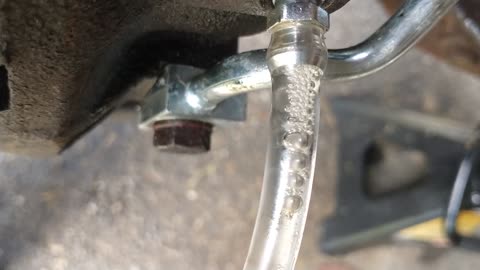
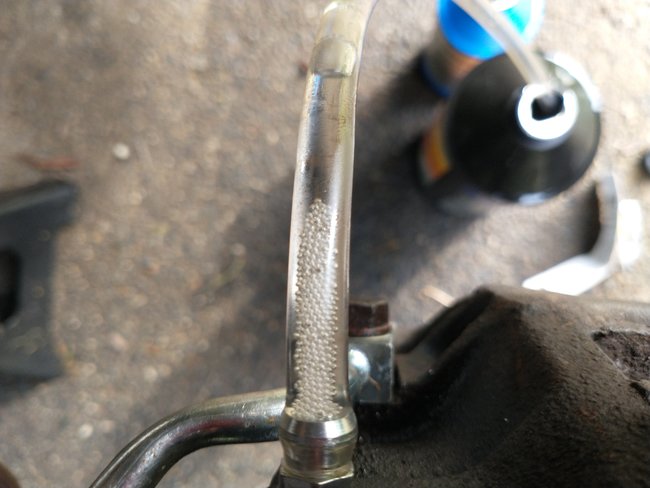
That being said I've attempted again to bleed the front brakes and all that happens is what you will see in the video I've included. I continually topped the master cylinder off with close to 24 ounces of DOT3 before I tightened the bleeder screw. 24 ounces is enough to fill the entire line plus some, yet all it did for 20 minutes straight is what you see in the video. I did, once again check for leaks and couldn't find any. I just cannot comprehend any way that much air could be in that one line.
Aug 26, 2021 at 2:17 PM
Avatar
SWILSON3828
  • MEMBER
  • 112 POSTS
Sorry, not sure why that video I initially uploaded is playing like it is. Here is a better video for you:
Aug 26, 2021 at 2:38 PM
Avatar
SWILSON3828
  • MEMBER
  • 112 POSTS
Here is a picture since the videos aren't showing properly:
Aug 26, 2021 at 2:51 PM
Avatar
SWILSON3828
  • MEMBER
  • 112 POSTS
Sorry man for all of the messages. Just trying to keep you up to date on what is going on. Okay, so I removed the front two calipers today. On the drivers side only one of the two cylinders in the caliper pushed out, the other remained stuck in place and didn't move, and on the passenger side both valves barely moved, so obviously the driver side caliper needs to be replaced. Not sure if that would be the issue because it seems to me if a caliper was bad it would be leaking. Is there any check valve anywhere that might would let abnormally high pressure off of a braking system? I know there is one on the BB. Thanks yet again.
Aug 26, 2021 at 5:17 PM
Avatar
JACOBANDNICKOLAS
  • CERTIFIED EXPERT
  • 110,175 POSTS
Hi,

It doesn't have to leak to be bad. It sounds like it is though. Also, what do you mean by both valves barely moved? Do you mean the caliper pistons? If they are barely moving, it sounds like either it is bad or there isn't enough pressure.

Let me know that. Also, can you get a helper. We are going to try bleeding in a different way and you need someone to help. Take a look through this link. It requires a scan tool that to open the valves on the ABS. If you can't do that, try the bleeding procedure indicated. Basically, with the engine off, pump the brake pedal to get a good pedal. While holding pressure on it, have the helper open the bleeder until the brake pedal hits the floor. Before releasing the pedal, have the helper close the bleeder. Do that until no air comes out.

Also, I spoke with the site owner regarding your truck. He also indicated a bad hub bearing can allow movement in the rotor. When you release the brake, it can actually push the pistons back in causing the pedal to go to the floor again. See if you can see anything.

He also suggested providing this link for you. Take a look through it and see if anything helps.

https://www.2carpros.com/articles/how-to-bleed-or-flush-a-car-brake-system

Let me know.

Joe
Aug 26, 2021 at 7:51 PM
Avatar
SWILSON3828
  • MEMBER
  • 112 POSTS
Thanks for the info. I can do everything you mention, but have no ability to bleed the ABS module with a scan tool. Do you have an idea of what might be a good but inexpensive scan tool that would allow me to do such? Also, I've looked for the ABS unit. I know you mentioned that it was behind the glove box but I cannot locate it. I see what I figure is the ECM, but I see nothing with brake lines coming off of it, unless the ABS module and the actual hydraulic portion of the ABS are at separate locations. I guess I'm simply going to go through the system again in addition to replacing one or both front calipers. Also, yes I was referring to the pistons in the calipers when I mentioned about the left one only having one piston working and the other stuck, and the right with both pistons barely moving. Didn't see any issues with the hub. No vibration in either as far as I could tell. I do know this whole mess started when I replaced the rear wheel cylinders and brakes shoes. Should have just left it as is and not messed with it. Thanks
Aug 27, 2021 at 7:32 AM
Avatar
SWILSON3828
  • MEMBER
  • 112 POSTS
HI,

So I replaced the front right caliper, reinstalled it, and bled it. After that I spent literally hours trying to bleed the system and still very little success. Pedal still firms up nicely when engine is off but right back to the floor again when the engine is on. Either there is just an extraordinary amount of air in the system or there is another issue. I did remove the vacuum line from the booster and plug it so as not to have a vacuum leak, put the truck in gear to see if the brakes would stop the rear wheels from turning without booster help. It was a little better but not good at all. Hitting the brakes as hard as I could all I could muster was a gradual stop. Trying to turn the front wheels with the brakes applied I can't budge them. Would love to be able to drive this to a garage and let them take care of it, lol.
Aug 27, 2021 at 1:40 PM
Avatar
JACOBANDNICKOLAS
  • CERTIFIED EXPERT
  • 110,175 POSTS
When you tell me the one caliper's pistons come out slow, that sounds like either a pressure issue or a bad caliper.

Was there any change when you installed the new master cylinder? Is the brake master cylinder fluid control valve still installed?

See pic below.

Joe

Aug 27, 2021 at 7:45 PM
Avatar
SWILSON3828
  • MEMBER
  • 112 POSTS
Good morning.

No, no change at all with the new master cylinder installed. Pressure builds when engine is off, but pedal straight to the floor when engine is running. I do think the front calipers are working properly now since I replaced the left front caliper. System was re-bled per rear wheel ABS instructions. Yes, the FPV is installed. Also, I noticed there was some sort of hydraulic mechanism that sits right under the master cylinder and is actually attached, along with the master cylinder to the two bolts that attach the MN to the BB. Is that the ABS hydraulic mechanism?? Thanks
Aug 28, 2021 at 8:27 AM
Avatar
SWILSON3828
  • MEMBER
  • 112 POSTS
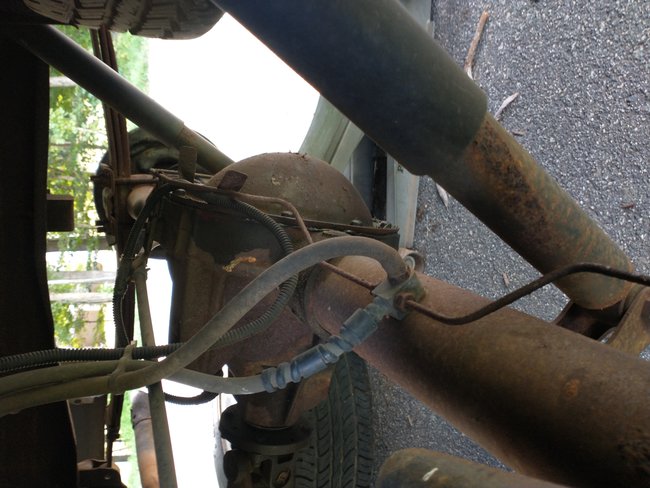
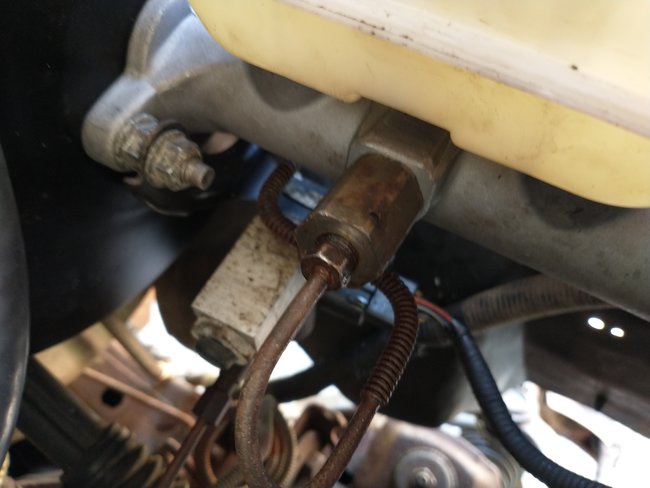
Also, I know you said the ABS module for my truck is behind the glove box, but I can tell you I've looked and looked and looked some more and do not see any type of brake line coming from anywhere other than the master cylinder and the contraption underneath it that I mentioned in the previous message. I have searched the entire vehicle for the brake lines coming off the ABS pump and I see none anywhere. Noe under the hood, and none underneath the truck in the front or back. Now I do know that this was a wrecked vehicle when I bought it in 1998 so I'm not sure if there was anything changed on it or not because I've never needed to do anything with the brakes other than changing the pads and shoes. On none of the wheels is there an additional line going to the back of the wheel that you would normally see with ABS. The only lines are the brake lines going to the front wheels, and the brakes lines and parking brake cable going to both rear wheels. There is a contraption that is sitting to the left of the hogs head that has both rear brake lines running from it and what appears to be electrical connections coming from it, so this may be associated with the rear ABS, but I'm not certain. I do know the ABS light is flashing rapidly, but that could be because there is an issue with the braking system itself, and there have been a couple of times where I've brakes a little hard and felt what feels like the abs kicking in. Not sure if it being a 4WD manual trans has any bearing on the issue. I've included a two pics to explain what I'm talking about. Thanks
Aug 28, 2021 at 10:23 AM
Avatar
SWILSON3828
  • MEMBER
  • 112 POSTS
Also wanted to include these images of the master cylinder, along with the contraption underneath it.
Aug 28, 2021 at 12:04 PM
Avatar
SWILSON3828
  • MEMBER
  • 112 POSTS
Good evening. Well, I finally have driving brakes. Still have a broken emergency brake, so that is the next project. In any event I did go ahead and replace the booster and re bled the lines afterwards and I finally got brakes. Not sure whether it was some fluke problem with the BB, or it just needed one more bleed. The BB was in bad shape as the springs and the like where the rod goes from the pedal into the BB was all rusted and corroded, and the protective boot was gone. The extra bleed had a tiny bit of air on one line but overall it appeared the lines were in pretty good shape. Now as far as the ABS working I don't know, but I do know the flashing ABS light went off and is no longer flashing. Now if I can get the emergency brake replaced I think everything will be in good shape. I do have another emergency brake cable that I ordered before I realized my driving brakes were gone, so I guess Ill attempt to fix that tomorrow. I appreciate all of the advice and help with these issues. I'll be back in touch to let you know how the emergency brake replacement goes. Thanks again and take care.
Aug 28, 2021 at 7:10 PM
Avatar
JACOBANDNICKOLAS
  • CERTIFIED EXPERT
  • 110,175 POSTS
Hi,

You are very welcome, and thanks for the update. It still isn't making sense to me, but as long as they work, that's a good thing. LOL

As far as the ABS light, if it is off, they should work.

Let's see if we can get the parking brake installed. Hopefully, that will go well for you too.

Take care,

Joe
Aug 28, 2021 at 10:15 PM
Avatar
SWILSON3828
  • MEMBER
  • 112 POSTS
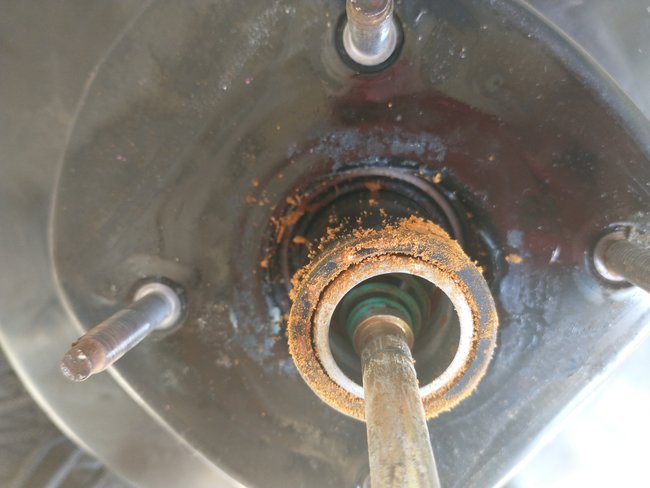
I have no clue how or why it started working other than I adjusted the BB shaft out just a hair and that little bit of difference may have pushed the valves in the MC just enough to get a tiny bit of air out that was trapped in the MC itself because a tiny bit of air did expel on that last bleeding. That's the only thing I can think of other than some crazy leak in the BB somewhere.
Aug 28, 2021 at 11:10 PM
Avatar
JACOBANDNICKOLAS
  • CERTIFIED EXPERT
  • 110,175 POSTS
That shaft could have been the problem. Regardless, I'm glad it's working.

Take care and let me know how things work out with the parking brake.

Joe
Aug 28, 2021 at 11:29 PM
Avatar
SWILSON3828
  • MEMBER
  • 112 POSTS
Thought I would share this photo with you of the old BB.
Aug 30, 2021 at 6:48 PM
Avatar
JACOBANDNICKOLAS
  • CERTIFIED EXPERT
  • 110,175 POSTS
Hi,

That doesn't look too healthy. LOL Did you have any issues replacing it?

Joe
Aug 30, 2021 at 8:35 PM
Avatar
SWILSON3828
  • MEMBER
  • 112 POSTS
Haha. a ring of pure rust that looked like a huge washer fell off when I pulled it out, but no, no problems replacing it at all. A very easy repair.
Now, as far as the parking brake cable goes. I'd hoped the first cable was just a wrong part sold by accident, but the new cable I just got is identical in length as far as the cable and the shroud are concerned. Not exactly sure how it make it fit as there really isn't anything different I would or could do compared to the first time. I'd hoped the new cable would be about an inch longer, but no luck.
Sep 2, 2021 at 5:04 PM
Avatar
JACOBANDNICKOLAS
  • CERTIFIED EXPERT
  • 110,175 POSTS
Hi,

By any chance, have you confirmed that the part number of the product crosses to the OEM part number I provided? Also, is it the same brand as the first one?

Joe
Sep 2, 2021 at 6:55 PM